
كتبت/ د. جيهان عبدالرحمن عبدالرحمن الشيخ
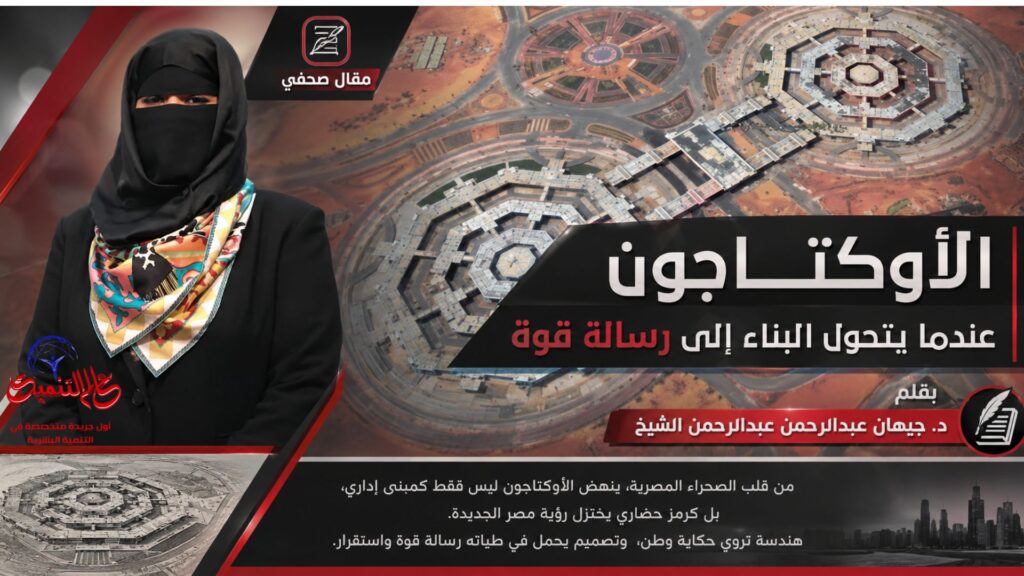
ليست كل المباني تقاس بارتفاعها، ولا كل الصروح تقاس بمساحتها، فهناك منشآت تُبنى بالحجر، وأخرى تبنى بالرؤية، ومن بين هذه الأخيرة يبرز “الأوكتاجون” في العاصمة الإدارية الجديدة، ليس مجرد مقر للقيادة الاستراتيجية، بل عنوانًا لمرحلة جديدة تتداخل فيها التكنولوجيا مع التخطيط، والهندسة مع الأمن، والرؤية مع المستقبل.
يحمل الاسم دلالة معمارية واضحة، فهو مستوحى من التصميم المثمن ذي الأضلاع الثمانية، في تجسيد لفكرة الترابط والتكامل بين منظومات القيادة المختلفة، لكن القيمة الحقيقية للأوكتاجون لا تكمن في شكله الهندسي، بل في فلسفة إنشائه؛ إذ صمم ليكون مركزًا متكاملًا لإدارة العمليات والأزمات، يعتمد على أحدث نظم القيادة والسيطرة والاتصالات وتحليل البيانات، بما يدعم سرعة اتخاذ القرار في عالم تتسارع فيه التحديات.
في زمن لم تعد فيه الحروب تقتصر على الميدان، بل امتدت إلى الفضاء الإلكتروني والمعلوماتي، أصبحت قوة الدول تقاس بقدرتها على إدارة المعرفة قبل إدارة السلاح، وعلى امتلاك منظومات ذكية قادرة على استيعاب المتغيرات في لحظاتها الأولى ومن هذا المنطلق، يمثل الأوكتاجون نموذجًا للتحول نحو بنية استراتيجية تعتمد على التكنولوجيا والربط المؤسسي والتنسيق الفوري بين مختلف الجهات.
ولا يمكن النظر إلى هذا الصرح بمعزل عن مشروع العاصمة الإدارية الجديدة، التي تستهدف بناء مؤسسات حديثة تستند إلى الكفاءة والرقمنة والتخطيط طويل المدى. فالأوكتاجون ليس مجرد مبنى داخل العاصمة، بل أحد أبرز رموز رؤية تسعى إلى تطوير منظومات الدولة وتعزيز جاهزيتها لمواجهة تحديات المستقبل.
إن الأوطان لا تحمى بالقوة وحدها، بل تحمى أيضًا بالعقل الذي يخطط، والعلم الذي يطور، والمؤسسات التي تستشرف المستقبل، وبين جدران الأوكتاجون تتجسد هذه الفلسفة؛ فلسفة تؤمن بأن الأمن القومي في القرن الحادي والعشرين يبدأ من المعلومة الدقيقة، والقرار السريع، والتكنولوجيا المتقدمة.
فالأوكتاجون ليس مجرد مبنى… بل رسالة تقول إن بناء المستقبل يبدأ ببناء القدرة على إدارته.
The Octagon: A Strategic Architecture for National Security and Future Readiness
In the twenty-first century, national power is no longer defined solely by the size of armed forces or military capabilities. Instead, it is increasingly determined by a state’s capacity to integrate advanced technologies, process strategic information in real time, and make informed decisions within highly complex security environments. Within this evolving paradigm, Egypt’s Octagon, located in the New Administrative Capital, emerges as a remarkable example of contemporary strategic architecture and institutional modernization.
The Octagon represents far more than a defense headquarters. It embodies a comprehensive vision for building an integrated command ecosystem that combines operational efficiency, digital transformation, secure communications, and intelligent decision-support systems. Its distinctive octagonal design symbolizes coordination, resilience, and the interconnected nature of modern command structures, reflecting the principles upon which twenty-first-century security institutions are built.
Modern security challenges have evolved beyond conventional warfare to encompass cyber threats, information warfare, artificial intelligence, hybrid conflicts, and transnational security risks. Consequently, strategic command centers must possess the capability to collect, analyze, and synthesize massive volumes of information while facilitating rapid and accurate decision-making. The Octagon illustrates this transformation by representing a new generation of command infrastructure designed to operate within an increasingly data-driven security landscape.
From a strategic perspective, the facility aligns closely with Egypt’s broader national vision for institutional development and digital governance. As an integral component of the New Administrative Capital, the Octagon reflects the state’s commitment to establishing resilient institutions capable of adapting to emerging geopolitical and technological realities. It demonstrates how architectural innovation can serve national objectives by integrating engineering excellence with strategic functionality.
Furthermore, the Octagon illustrates a global shift toward intelligent defense ecosystems in which artificial intelligence, advanced analytics, secure digital networks, and integrated command-and-control capabilities form the foundation of national preparedness. Such infrastructure enhances coordination among strategic institutions, improves crisis management capabilities, and strengthens the resilience of national security systems in an increasingly unpredictable international environment.
Ultimately, the significance of the Octagon extends beyond its physical structure. It symbolizes the transformation of national security from a concept centered primarily on military strength into a multidimensional framework driven by knowledge, technology, innovation, and institutional integration. It stands as a testament to the principle that sustainable national security is achieved not only through the possession of power, but through the ability to manage that power intelligently, efficiently, and strategically.
The Octagon therefore represents more than an architectural achievement; it is a strategic vision for the future, demonstrating that the nations best prepared for tomorrow are those that invest today in knowledge, technology, institutional excellence, and integrated strategic leadership written by dr : Gihan Abd El Rahman El shiekh